投稿

ラベル(古伊万里 Old Imari Ware)が付いた投稿を表示しています

染付椀形猪口 松竹梅文 Old Imari Cup: Pine, Bamboo, Apricot-tree Pattern

イメージ
口径 75 mm、高さ 46 mm、高台径 36 mm 古伊万里の猪口はずいぶんあつめたので、もういいかな、と思うのだが、こういう猪口をみかけるとつい手が伸びてしまう。藍九谷の流れをくむ、17世紀後半にかかる作と考えられる。定番の松竹梅文が描かれる。高台内には二重圏線。腰の部分がほっそりした古格のあるフォルムで、品がある。さいきんは古伊万里が値崩れしている、なんて話を耳にする。たしかにこういう猪口が2万円以下で手に入るとは、いいことなのか、悪いことなのか。

矢羽氷裂文の猪口 Imari Cups of Feather Fletching and Broken Ice Pattern

イメージ
左は高さ 60 mm、口径 55 mm。右は高さ 59 mm、口径 66 mm。 上に矢羽文、下に氷裂文をあしらった猪口二種。ちょっと大きめののぞき猪口と、ちょっと小さめのそば猪口で、大きさ的には大差ない。矢羽の描き方にちょっとした違いがあり、目の錯覚の類だとおもうが、のぞきのほうは矢が上向き、そば猪口は下向きのように(わたしには)見える。猪口の柄としては矢羽文も氷裂文もともに江戸中期に相当流行したが、これを両方組み合わせるとは所有者の満足度合いがしのばれる。 ついに日本の夏も最高気温40℃がふつうになってきたが、この文様の組み合わせは食卓でいかにも涼しげである。 Two differently shaped old Imari cups decorated with a feather fletching pattern in the upper part and with a broken ice pattern in the lower part. Two cups are of similar size, because the nozoki -type cup is a bit bigger and the sobachoko -type cup is a bit smaller than ordinary ones. It looks to me that the nozoki 's arrows are downward, and the sobachoko 's arrows are upward. The feather fletching and broken ice patterns were very popular in the mid Edo period (18th century). I think the owner would be satisfied with this composite design. This design looks cool in such a hot summer day that the maximum temperature reaches 40 degree Celsius, which is not uncommon in recent Japan...

兎丸文 のぞき猪口 Rabbit and Circle Pattern Nozoki-type Cup

イメージ
Width: 51 mm / Height: 44 mm 半筒に近い、ちょっとめずらしい形ののぞき猪口。丸文が5つあって、その中には寿の字、樹下人物図、山水楼閣図、菖蒲、そしてなんとも愛らしい波兎がそれぞれ描かれる。絵付けはとてもていねいで、19世紀はじめ頃の上手の古伊万里と考えられる。 An old Imari nozoki -type cup that is relatively rare in shape. Drawn inside five circles are a Chinese character meaning congratulations, two persons under trees, a castle in a landscape, irises, and a lovely rabbit running above a wave. I guess it was a high-quality Imari ware in the beginning of the 19th century. 波に兎の意匠は、白波が立つ水面に月が映っているさまを、兎が走っているように見えるとたとえたもので、謡曲「竹生島」の一節から江戸期に流行した、と言われている。他の文様も情景ゆたかに描かれている。 A rabit running above a wave shows a wavy water surface reflecting the Moon, in which Japanese believed a rabbit lived. The rabbit and wave pattern was popular in the Edo period (from 17th to mid 19th centuries).

菊花文 のぞき猪口 Chrysanthemum Nozoki-type Cup

イメージ
Height: 61 mm / Top width: 54 mm 上に向かってじゃっかん末広がりな形をしたのぞき猪口。上下互い違いに8個描かれる文様は菊の花とされる(たとえば中島由美 編「古伊万里 蕎麦猪口・酒器 1000」17ページ、講談社、2001年;「小さな蕾」2020年10月号、24ページ、創樹社美術出版、など)。古伊万里界隈では皇室の紋章のような抽象化された菊文のほうが出現頻度が高いとおもうが、これは重力によって花びらが垂れ下がった具象的な菊文で、レア度はやや高いだろう。一般に古伊万里は器全面を文様で埋め尽くす傾向にあるが、これは白磁の余白をのこしたデザインだ。ちょっとしたユーモアが感じられる。 A nozoki -type small Imari cup with a top rim slightly wider than the bottom. Eight marks drawn in an alternate way mean chrysanthemum flower. I think this type of chrysanthemum hanging down under gravity is rarer in old Imari wares than more abstract symbol like the Imperial seal of Japan. The design leaving white margin is also comparatively rarer in old Imari wares. I think it has a bit sense of humor. のぞき猪口2種。 これとほとんど同じ形状をした猪口(以前 こちら で紹介した)と並べてみたのが上の写真である。どちらも文様の描き方や配置がシャレている。渦福銘や縁べりの四方襷文の描き方もおなじで、同一工房でほぼ同じ時期につくられたのではないかと推測する。 The above photo compares two nozoki -type cups, one of which has been shown in this blog. There are similarities in the shape, th...

のぞき猪口 瓢箪図 Bottle Gourd Nozoki-type Cup

イメージ
高さ height: 5.5 cm / 口径 top width: 5.1 cm ちょっと染付がにじんでいるが、ひょうたんが4個か5個なっているのがわかる。花も描かれているかもしれない。裏面には蝶が2匹とんでいる。そば猪口では例があるが、のぞき猪口でひょうたんが描かれているのはかなりめずらしいのではないだろうか。 There seem to be four or five bottle gourds that are drawn with a blurred blue pigment. There might be some flowers. Two butterflies fly on the backside. Bottle gourd is rare as a motif of Old Imari cups, especially of nozoki-type cups. 参考 小川啓司「そば猪口絵柄事典」(93ページ、光芸出版、1974年) 「古伊万里 蕎麦猪口・酒器1000」(63ページ、責任編集 中島由美、講談社、2001年)

麻の葉文 のぞき猪口 Hemp-leaf Pattern Nozoki Cup

イメージ
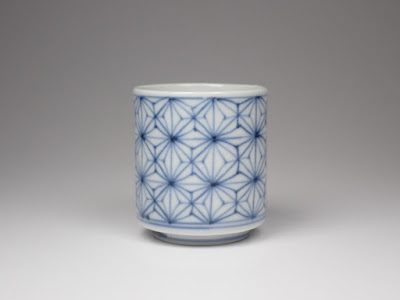
Top width: 48 mm / Height: 53 mm 小ぶりなのぞき猪口で、全面に麻の葉文様が描かれる。麻葉文は日本の伝統文様で、着物の柄などに多く見られるが、古伊万里では案外例が少なく、のぞき猪口はとくにめずらしいようだ。わたしも完品を見たのはこれがはじめてだ。むしろ現代の磁器製品の柄でよく見かける。 A relatively small nozoki -type cup with a hemp's leaf pattern that is a Japanese traditional design usually seen in kimono's patterns. However, the hemp-leaf pattern is rather rare in old Imari porcelains. I saw a complete hemp-leaf nozoki sold at a shop for the first time. It is more common in modern ceramic wares. 線描きのみで構成されたシンプルなデザインである。縁の裏文様も省いていて、全体にあっさりしている。 A simple design composed of blue lines. There is no decoration at the top inner surface.

色絵菊花文 のぞき猪口 Chrysanthemum Nozoki-type Cup

イメージ
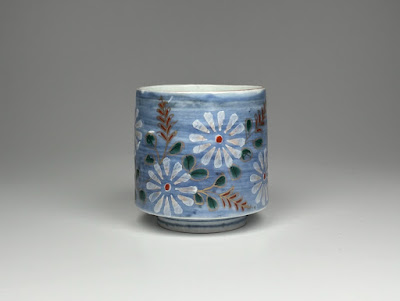
Top width: 58 mm / Height: 62 mm / Bottom width: 41 mm 大振りでやや尻張り型ののぞき猪口で、呉須をうすく塗り込めて、その上に植物の花の文様を色絵と金彩で描く。菊の花とおもわれる文様は、おそらくだが、白土型紙摺りと呼ばれる印判である。九州陶磁文化館編「古伊万里の見方 1.種類」(2004年)や「同 3.装飾」(2006年)によれば、白化粧土をつかって文様を描く手法は、中国では餅花手(もちはなで)とよばれ、日本でも初期伊万里の時代からつくられている。18世紀前半くらいまでみられるとのことなので、こののぞき猪口もそのくらいの時代があるかもしれない。古伊万里ののぞき猪口としては、けだし珍品である。 This is a relatively large nozoki -type Imari cup with a wider bottom part than the top. Plants and flowers are drawn with color glazes on a light cobalt blue background. Chrysanthemum ( kiku ) flower is probably a print using white clay (engobe) and a paper pattern, which had been seen in old Imari-ware from the 17th to the early 18th centuries. I think this is a rare nozoki cup. まるで遠くで花火が打ち上がっているみたいだ。印判だとすればおなじ文様がくりかえし現れるはずだが、実際そうなっている、とおもう。目白コレクションにて入手。 補足 以前紹介した、おなじ白土型紙摺りの白磁猪口は こちら 。 「古伊万里の見方」によれば、一般に白化粧土で描いた文様のことを白絵(しろえ)と呼び、紙摺り印判の他、筆で描いたり、あるいはスポイトのような器具をもちいて白土を盛り上げるように描く「イッチン」技法もある。古伊万里以外でも一般的にもちいられる手法である。 いまいちよくわからないが、工程と...

唐草文 のぞき猪口 Arabesque Nozoki-type Cup

イメージ
Top width: 53 mm / Height: 53 mm 墨はじきの手法で上下にジグザグ文様(雷文?)と蓮弁文とを配し、真ん中に唐草文様を描く。タコ唐草に似ているが、まず輪郭線を描いてそのあと中をダミでうめるという、いわゆる二重唐草で、手が込んでいる。余白が効果的で、センスがいい。鎌倉市内の骨董屋で手に入れた。 An arabesque belt is hemmed by zig-zag patterns that were drawn with a water repellent and then overpainted with blue glaze. The outlined arabesque pattern also indicates the potter spent considerable time and effort. I think the white parts are effective. I purchased it at an antique shop in Kamakura, Kanagawa.  以前紹介したのぞき猪口(左)との比較。 かれこれ20年くらい前に手に入れた鶴丸文様ののぞき猪口 とは、 二重唐草文である 縁の裏側に四方襷などの文様を描かない 高台内に一重の圏線を描き、富貴長春の銘をいれる など、デザインの共通点があり、これらが同時期に、同じ窯でつくられたものかもしれないという、ある種のロマンを感じさせる。どちらもやや肉厚で、手取りも似ている。あとどちらにもヒッツキがあって、施釉前のキズを直した形跡がある。 There are some similarities with the one that was shown in this blog before . For example, both have outlined arabesque, no painting at the inner part of the top rim, and the same four Chinese characters inside a blue circle at the bottom. I guess they were manu...

梅花図 碗形猪口 Plum Blossoms Cup

イメージ
Top width: 78 mm / Height: 51 mm / Bottom width: 38 mm 以前の記事 にも書いたが、こういった古手の碗形の猪口をみつけるとつい財布のひもがゆるんでしまう。正面に岩山(太湖石?)の上に生える梅の木と花が描かれ、裏には鳥が飛んでいる。梅の枝を境界線と見立てて、上側を呉須でぬりこめるのは、いかにも「江戸」を感じさせる独特のデザインである。大小の図案の対比、効果的な余白、高台内の一重圏線、端正な器形など、17世紀後半、時代が下ったとしても元禄期までとおもわれる、古い時代の猪口の特徴を備えているとおもう。 As I wrote before , this kind of old Imari cup is one of my favorites that loosen the purse strings. Ume (Japanese plum) tree and blossoms growing from a rocky hill are shown on one side, and a flying bird on the other side. The ume 's branches play a role of a boundary and the upper part is glazed in blue, which is so unique a design that it is definitely full of the Edo (old Japan in the 17th century to the early 19th century) flavor. This cup has several characteristics of the late 17th century's Imari cup such as a contrast of big and small drawings, an effective white margin, a blue circle at the bottom, and a well-made curved form. 最上手、というほどではないが、全体としてバランスのとれた、この時代の佳作といえるだろう...

童子牛追図 のぞき猪口 Cow and Boy Nozoki-type Cup

イメージ
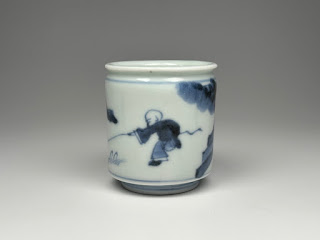
Width: 51 mm / Height: 57 mm 少年が牛に縄をゆわえて引っ張る図は、古伊万里の絵柄としてはそれなりに例があり、初期伊万里にもみられる(「古伊万里蕎麦猪口・酒器1000」講談社、2001年)というが、のぞき猪口の絵柄としてはかなり珍しいだろう。絵柄も珍しいが、もっと珍しいのは口の部分の細工だ。わたしも20年近く古伊万里ののぞき猪口に注目してきたが、こういった「くびれ」のあるのぞきは1000個に1個かそれ以下の出現頻度だとおもう。 There have been known a few examples of Imari porcelains that depict a boy pulling a cow with a rope, but I think a nozoki -type small cup with this drawing is really rare. It is much rarer to see a wavy "neck" at the top part. Frequency of appearance of that will be one to a thousand or less from my 20-year experience. 古伊万里ののぞき猪口は、酢、味噌、醤油、煎り酒など刺身のつけだれ(あるいはかけ汁)をいれるための器で、あらたまった会席料理の中で刺身皿に添えられたものだ。江戸時代は、鮮魚の流通はいまほど発達していなかったし、酢や醤油もまだ貴重だったから、こういった「ごちそう」の席を華やかにするような、調味料専用の器が尊ばれたのである。 以下はほとんど根拠に乏しい私見ではあるが、17世紀後半から18世紀初頭にみられるのぞき猪口の前駆的なタイプには、 長猪口 や 末広がりのもの など、形状にバリエーションがある。その後、18世紀前期〜中頃になると、円筒形のいわゆる「のぞき猪口」が形式として確立する。酒や酢、醤油等が大量生産されるにともなって「刺身皿にはのぞき猪口」という取り合わせがある種のお約束として一般に普及していったのだろう。 それから50年くらいたって、18世紀末から19世紀になると、末広がりの形だったり、チュー...

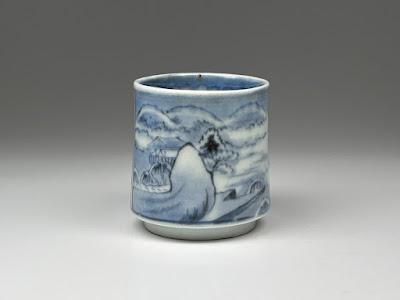
富士図 碗形小猪口 Mount Fuji Small Cup

イメージ
Top width: 70 mm / Height: 44 mm / Bottom width: 33 mm 一面に富士山の図、もう一面に山水図が描かれる。富士山の猪口は図録などで知っていたが、実際に店頭に並んでいるのははじめて見た。雑誌「小さな蕾 2020年10月号」(創樹社美術出版)に掲載の「國津コレクション」に富士山の絵柄ののぞき猪口が3種紹介されていて、形状こそ違うものの、そのうちの1個と同手だ。ちなみにその猪口は「最高レベルの稀品」とランク付けされていて、他の富士山図より希少性が高いという。背景の空が江戸後期特有の濃い呉須で塗り込められ、雲と松並木が丁寧に描かれている。 Mt. Fuji is drawn on one side. I knew this kind of Mt. Fuji Imari cup in books, and it was the first time I saw it at an antique shop. This design is almost the same as that illustrated in an antique magazine, Chiisana Tsubomi , published in October 2020. It is described that this is the rarer design than another two different Mt. Fuji cups shown together in that magazine. The deep blue sky is characteristic in 19th century Imariwares. The clouds and pine trees are well painted. 山水図は、背景の空が白磁で、いかにも冬の情景を思わせる。笠をかぶった旅人(?)がユーモラスだ。富士山本体と高台内に呉須の「染み」があるが、これは職人の不手際によるものだろうか?これが欠点だと言われたら欠点だろうが、それはともかくとして、たいへんめずらしい絵柄の上手の猪口だとおもう。 The other side depicts a (snowy?) landscape. I gu...

獅子と梅鶯図 のぞき猪口 Lion, Nightingale and Plum Tree

イメージ
Top width: 53 mm / Height: 58 mm / Bottom width: 40 mm いかにも「江戸」を感じさせるデザインののぞき猪口。縦縞文様を背景に梅とウグイスの窓絵が2つ、そして四方襷を背景に獅子図の窓絵が2つ、それぞれ上下に描きわけている。古伊万里愛好家のあいだでは、裾まわりの剣先文様は上手の猪口のあかし、とされているが、たしかにできのいい、江戸中期の佳作といえるだろう。 This nozoki -type cup shows the typical design of the Edo period. Two picture frames of a plum tree and a bird (nightingale) with a vertical-line pattern and another two picture frames of a lion with a diamond-lattice pattern are respectively drawn on the upper and lower parts. The sawtooth pattern at the bottom part is said to be a proof of a high-quality old Imari cup, which does apply to this case. とりあわせ的にはやはり梅にウグイスだろう。正月につかいたい器だ。 An uguisu (nightingale) must fly around ume (plum) blossoms in Japan. It is suitable in New Year's Days. 獅子の描き方や顔料のつかい方は 以前紹介した猪口 とほぼおなじ。製作年代もおなじくらいだろう。 The lion is drawn in a similar way with similar pigments as the one shown before . 高台はかなり薄い。 The bottom rim is thin.

山水図 のぞき猪口 Mountain and River Views

イメージ
口径 top width: 50 mm / 高さ height: 53 mm / 高台径 bottom width: 41 mm 遠景と近景の異なる風景を2面に割り付けている。遠景の図はまるで水墨画のようだ。薄ダミで白く抜かれた部分が雪にみえる。こんな小さな器に、これだけの絵付けをいとも簡単にやってのける有田の職人の技術は驚嘆に値する。多少の釉ハゲや高台のホツはあったが、ひさしぶりにちょっとヤバいのぞき猪口に出会った。 Two different views are drawn with cobalt-blue gosu on two opposite faces. The distant view of mountain and river resembles a Chinese ink painting. The white part looks like snow. It is amazing of Arita's craftsman to make an artistic drawing on this small cup. There were slight flaws, but I am happy to meet such a nice nozoki -type cup. 反対側。こちらは濃いダミで川べりの近景を描く。ダミの濃淡が視点の遠近と対応している。雪の日にこれで一杯やったら最高だろう。  The other side is a close-up view of plants near a river, drawn with a darker blue glaze. It will be a fun to drink sake with this cup on a snowy day. 縁の裏もダミで文様をつくっている。やや尻張形で、のぞき猪口としては古い様式を保っているとおもう。18世紀末頃か?  The top inner side is also drawn with a blue glaze. I think the shape with a little wider bottom part still keeps an older style of nozoki cups...

そば猪口形の小さな猪口 Small Bucket-shaped Imari Cups

イメージ
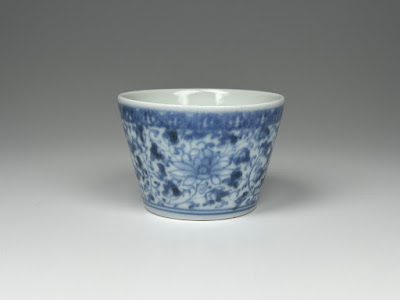
そば猪口をぎゅっと縮めたような、バケツ形の小さな猪口がある。芽猪口、姫猪口、豆猪口などと呼ばれる。量産されたものではなく、そば猪口やのぞき猪口なんかに比べれば数はずっと少ない。 The following old Imari wares can be classified as small "bucket-shaped" cup that is much rarer than soba-choko and nozoki-choko . 1. 花唐草文 Flower Arabesque 18世紀 18th century 口径 top width: 60 mm / 高さ height: 40 mm / 高台径 bottom width: 42 mm この花唐草文様は江戸中期頃相当はやったようで、これと双璧をなす蛸唐草とともに古伊万里を代表する絵柄と言えよう。現代の古美術市場でもたいへん人気がある。ただそれゆえにこそ、これはと言えるようなきれいな花唐草文の器はなかなか見かけないし、あってもかなり高価である。この猪口も呉須がにじんでしまっていて、お世辞にもていねいな絵付けとはいえない。器自体はたいへん薄造りで、光が透けるほどである。 " Hana-karakusa " (flower arabesque pattern) was very popular in the mid Edo period. Hana-karakusa and another popular pattern " tako-karakusa " (octopus arabesque) are probably the best known old Imari designs and they are highly rated in modern antique markets. That means it is difficult to find well-drawn hana-karakusa cups at a reasonable price. Actually, I can't say this example is a first-class Imari as the blue ...

撫子文 のぞき猪口 Pinks

イメージ
18世紀 18th century 口径 top width: 50 mm / 高さ height: 51 mm / 高台径 bottom width: 36 mm この文様は撫子(なでしこ)の花とされている。古伊万里の絵柄としてはめずらしいものではないが、よく見かけるのは大型のそば猪口で、小型ののぞき猪口としては案外めずらしい柄なのではないかと、のぞき猪口をあつめて早20年にもなろうかというわたしはおもう。東京・有楽町の国際フォーラムでやっている大江戸骨董市でみつけた。おや、めずらしいな、とおもって裏をみたら 1.5 というシールが貼ってあって、1万5000円はちょっと高いだろうとためらっていたら、実際は縁裏にソゲがあって 1500 円だった。傷はあるけれどもつかう分にはそれほど支障なく、昼過ぎにでかけた割にはいいものに出会えた。最近は生活必需品の物価が高くなってこういう骨董品は売れなくなったのか、とてもリーズナブルな価格設定だ。会場は外国人観光客とおぼしき人であふれていたが、この業界もかれらの購買欲にたよるしかないのかな、とおもったりする。 This pattern represents pinks (dianthus) and is quite common in old Imari cups. However, most of them are large soba-choko cups and I guess from my almost twenty-year experience that it is rare in small nozoki -type Imari cups. I found it at Oedo Antique Market held in a courtyard of Tokyo International Forum. I first thought a small label at the bottom part that read "1.5" meant 15,000 yen, but it was actually 1,500 yen because there was a flaw at the top edge. The flaw didn't matter v...

末広形の小猪口2種 Two Small Imari Cups

イメージ
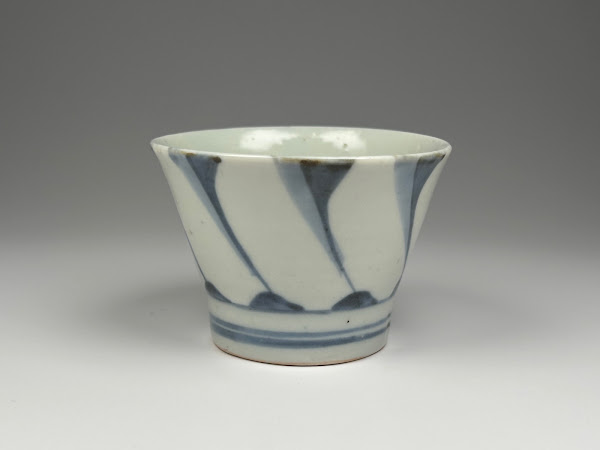
これから紹介する、直立する高台から斜めに末広がりに口が開くような形の猪口を俗に広東(かんとん)碗形と呼ぶ。 These Guangdong-type old Imari cups are characterized as a broadening shape toward the top with a vertical bottom part. 染付 小猪口 捻文 Twist Pattern 18世紀 18th century 口径 top width: 72 mm / 高さ height: 51 mm / 高台径 bottom width: 45 mm 生掛け焼成(素焼きを省略して施釉する焼成法)をおもわせる温かみのある白磁に、濃淡2種のダミで立ち昇る煙が風にたなびくような文様を描く。モクレンの花びらのようにもみえる。古伊万里の文様としてはよくあるもののようだが、一体何をデザインしたものなのかよくわからない。以前紹介した「竹矢来」の猪口(一番下の写真)といろいろと共通点があるので、時代的にもおなじくらいのものかなと想像する。 The twist pattern painted with dark and light blues is relatively common in old Imari wares. It looks like a flower (morning glory or magnolia?). The background off-white glaze suggests that it was baked without an unglazed baking process. It is similar to another bamboo-fence cup (see a picture at the end) and I guess they were made at the same age. 胎土はオレンジ色に焼けている。ふつうの古伊万里とは焼け方がちょっと異なるのは生掛け焼成だからか、あるいは有田の土ではなくよその窯の製品だったからかもしれない。いわゆる「くらわんか手」の雰囲気もある。 染付 小猪口 花文 Flower Pattern 19世紀 19th c...